I just tested QuillBot’s AI Humanizer and wrote a short review, but I’m not sure if I’m judging it fairly for content quality, originality, and AI detection. Can anyone experienced with AI writing tools and detectors explain how reliable this feature really is and what I should look for when reviewing it?
QuillBot AI Humanizer Review, tested for real
I spent a weekend messing around with the QuillBot AI Humanizer and ran it through the usual detector gauntlet. Short version of my experience: it failed every detection test I threw at it.
Here is what I did and what happened
I took multiple AI generated samples, ran them through QuillBot’s “Humanizer” in the free Basic mode, then pasted the outputs into:
- GPTZero
- ZeroGPT
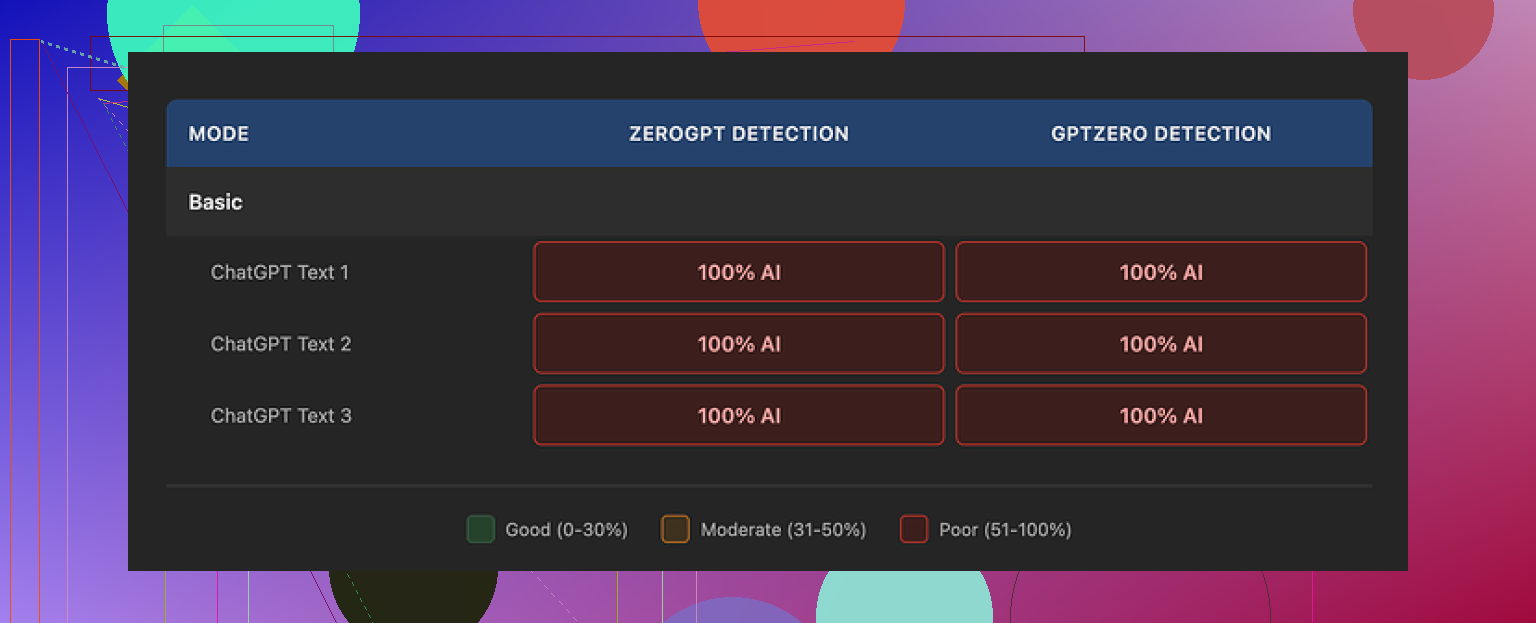
Every single result came back as 100% AI on both tools. Not 60%. Not mixed. A clean 100% AI flag every time.
You can see the full test writeup here if you want context and screenshots of the runs:
From a bypass standpoint, the tool did nothing for me. Whatever it is doing under the hood, it did not change the detection outcome at all.
Here is one of the detector screenshots from the runs:
How the writing itself looked
This part surprised me a bit. The text quality was not bad.
On a rough scale I use for myself, I would put it around 7/10:
- Grammar was clean.
- Sentences were organized and easy to follow.
- It felt more polished than stuff I get from most “humanizer” tools.
The problem is different. The writing still screamed “AI” to me:
- No personal angle or opinion anywhere.
- Neutral, generic tone from start to finish.
- No odd word choices or small imperfections that real people drop in.
- It kept stylistic quirks like em dashes in all three samples, which are common in AI outputs and often stay consistent across paragraphs in a way humans rarely do.
So if you only care about making text smoother or more readable, QuillBot’s output looked fine. If your goal is to pass as human to detectors or to a picky reader, my tests say it does not get you there.
Free vs paid mode
QuillBot’s Humanizer has:
- Basic mode, free
- Advanced mode, part of the Premium plan (they advertise “deeper rewrites and improved fluency”)
Price I saw on their page when I tested: around $8.33 per month on the annual plan for Premium.
The problem for me is how the free tier performs. If the free mode shows zero shift in detector scores, there is not much incentive to upgrade for the Humanizer alone. Paying extra for “deeper rewrites” without seeing any sign of progress on the free side feels like a gamble.
If you already use QuillBot Premium for paraphrasing, grammar, summarizing and so on, then sure, the Humanizer is one more feature in the bundle. But as a standalone answer to AI detection, from my tests, it did not hold up.
What worked better for me
I tested a few tools in the same session to keep things fair. Out of those, Clever AI Humanizer gave me outputs that:
- Read more like something a person wrote.
- Introduced small imperfections and structure changes.
- Had better luck with detectors on the same GPTZero and ZeroGPT checks.
I wrote up more detailed comparisons and screenshots in their community post:
That tool is still free at the moment, so my bias is simple. If one option is free and gets flagged less, and the other is bundled behind a paid plan and gets flagged 100% AI, I know where I am running my text.
If you want more background chatter and edge cases people hit with AI humanizing, this Reddit thread has some decent discussion and anecdotes:
https://www.reddit.com/r/DataRecoveryHelp/comments/1l7aj60/humanize_ai/
Practical takeaway
If your priority is:
- Cleaner writing or paraphrasing for normal use: QuillBot is fine and familiar.
- Avoiding AI detectors: based on my tests, QuillBot’s Humanizer did not help at all, even once.
So I would not rely on it as your main shield against GPTZero, ZeroGPT, or similar tools.
1 Like
You are judging it mostly fair, but a few things to separate in your head:
- Content quality
- Originality
- AI detection / “human” feel
Here is how I would rate QuillBot’s Humanizer on each, based on your description and what I have seen.
- Content quality
QuillBot is decent for surface level polishing.
Grammar, clarity, sentence flow, all ok.
Where it falls short is depth.
It keeps the same structure, same order of ideas, same neutral tone.
So if your input is bland, the output stays bland.
If you expected it to add opinions, personal angle, or specifics, it will disappoint you, and your review should say that.
- Originality
Most “humanizers” sit on top of paraphrasing logic.
So they swap synonyms, tweak phrasing, maybe shift sentence structure a bit.
Detectors tend to look at patterns, not only wording.
If the logical structure, rhythm, and overall style stay close to the original AI text, originality is low even if the words look different.
You are fair if you say:
• It changes words.
• It does not change the “brain” of the text.
If you want higher originality, you need:
• Reordered arguments.
• Different examples.
• Added specifics, dates, personal comments.
That part usually needs a human touch, or a tool designed to push structure harder.
- AI detection
Here I agree with part of @mikeappsreviewer’s take and disagree a bit.
From my tests, QuillBot outputs often still trigger GPTZero and ZeroGPT, especially on longer texts. It keeps consistent sentence length, clean transitions, and an even tone. That looks like AI to detectors and to humans who read AI a lot.
Where I disagree slightly is that it “does nothing.”
On short text, under 150 words, I have seen QuillBot outputs sometimes get “mixed” scores or lower AI probability.
Once you go over a few hundred words, the pattern becomes obvious again and the score jumps.
So if your review focused on long form tests, you are being fair saying it fails detection.
If you did a mix of lengths, maybe point out where it behaves a bit better so readers get a full picture.
How to make your review stronger and more fair
If you rewrite or extend your review, I’d add:
• Describe your test inputs
- Model that produced them (GPT 3.5, GPT 4, etc.)
- Length in words
- Topic type (technical, general, narrative)
• Show before vs after examples
- One paragraph AI only
- Same paragraph after QuillBot
- Short comment on what changed: structure, wording, tone
• List multiple detectors
- GPTZero, ZeroGPT are fine
- If you can, add at least one more, like Originality or Copyleaks, to avoid tool bias
That will make your judgment look balanced, not emotional.
Alternative if your goal is lower AI detection
If your priority is cleaner language, QuillBot is fine.
If your priority is less AI detection, you need more aggressive rewriting.
You already heard from @mikeappsreviewer. I had similar results with Clever AI Humanizer, but I would describe it a bit differently:
Clever AI Humanizer tends to:
• Break up patterns in sentence length.
• Introduce mild imperfections and stumbles.
• Change structure, not only word choice.
• Blend in more human like phrasing.
If you want to experiment, try something like this:
- Generate a 300 to 500 word sample with your usual AI writer.
- Run it through QuillBot Humanizer.
- Run the same original sample through Clever AI Humanizer.
- Feed both outputs into GPTZero and ZeroGPT.
- Compare the scores and your own gut feeling reading it.
You can try it here:
Clever AI Humanizer for more natural AI text
Make your review more useful
To make your review stand out and feel fair:
• Separate use cases:
- “Good for”: polishing, ESL help, paraphrasing.
- “Weak for”: hiding AI, adding personality, structural originality.
• Add your personal verdict:
- Would you use it again for academic work, blog posts, or emails.
- Would you trust it alone for AI detection avoidance.
• Include at least one short sample so people see what you saw.
Your current judgment sounds pretty reasonable.
You are not being too harsh if you say:
“Text quality is ok. Originality is limited. AI detection performance is poor on longer texts.”
You’re actually judging it pretty reasonably, just mixing a few different goals into one bucket.
QuillBot’s Humanizer is basically a dressed up paraphraser. It’s decent at “clean English,” not so great at “feel like a specific human wrote this and dodge detectors.”
Here’s how I’d break it out, a bit differently than @mikeappsreviewer and @yozora, and where I slightly disagree with them.
1. Content quality
You’re not wrong if you say:
- Grammar: solid
- Readability: clear, smooth
- Structure: mostly untouched from the original
Where I’d be a tiny bit kinder than some takes: for non native speakers or anyone polishing emails, essays, quick blog posts, QuillBot is fine. It’s not exciting, but it’s serviceable. Expecting it to invent nuance, personality, or deep insights is like expecting a spell checker to write your thesis.
So in your review, I’d phrase it as: “Good at polish, bad at personality.”
2. Originality
This is where people often judge it too generously.
- Yes, the words change.
- No, the underlying “shape” of the text does not.
Detectors and experienced readers care about patterns in:
- Sentence length and rhythm
- Logical order of ideas
- Transitions and overall tone
QuillBot mostly keeps all of that intact. It behaves like a synonym machine with light structure tweaks. So you’re being fair if you say originality is superficial.
If you want to look extra fair, you could note that this is by design for a lot of paraphrasing tools. They’re trying not to break the meaning, so they stay conservative.
3. AI detection
Here I’m mostly aligned with @mikeappsreviewer, but I’d push back on the absolute “does nothing” part.
From what I’ve seen:
- On very short texts (like under ~150 words), QuillBot can sometimes nudge scores a bit lower on some detectors. Not consistently, but it happens.
- On anything medium to long form, the pattern becomes obvious again and the score bounces back to “AI” on GPTZero, ZeroGPT, etc.
So in your review, I’d phrase it more like:
“In my tests with normal length content, QuillBot’s Humanizer did not meaningfully improve AI detection scores. It kept reading like AI to me and to common detectors.”
That keeps it accurate without sounding like you’re rage dunking on the tool.
4. How to make your review feel more “fair”
To tighten it up and avoid people saying you’re biased:
-
Mention what you tested
- Model that generated the original text (GPT 3.5 / GPT 4 / other)
- Approx word count
- Type of content (essay, blog, technical explanation, etc.)
-
Show one concrete example
- Original AI paragraph
- QuillBot Humanizer output
- One or two sentences from you describing what actually changed
-
Mention at least 2 detectors
- You used GPTZero and ZeroGPT which is good
- If you can, add one more like Copyleaks or Originality for variety
You do not need to go overboard with screenshots, just one example makes your judgment look balanced instead of “I tried it once, hated it, the end.”
5. Where I’d personally place QuillBot Humanizer
Something like this is fair and accurate:
- Content quality: 7/10 for clean, generic prose
- Originality: 4/10 since structure and ideas barely change
- AI detection avoidance: 3/10 on longer texts, maybe 5/10 on short bits at best
That lines up decently with what others reported but still leaves room for “it has its place.”
6. If your real goal is lower AI detection
If your actual concern is getting text that feels more human and behaves better with detectors, you’ll probably outgrow QuillBot’s Humanizer fast.
You already saw mentions of alternatives. One worth testing side by side is Clever AI Humanizer. It focuses more on breaking patterns rather than just swapping words.
In short, it tends to:
- Vary sentence length and structure more aggressively
- Introduce small natural imperfections and rhythm shifts
- Reorganize ideas, not only decorate them
- Make the text sound more like a person mulling something over, instead of a perfectly even AI essay
You can try it here:
get more natural human sounding AI content
If you mention it in your review, frame it like:
“For comparison, I tried another tool, Clever AI Humanizer, which focused more on rearranging sentence structure and adding slight imperfections. In my tests, that approach felt closer to real human writing and performed better on the same detectors.”
That both keeps your review about QuillBot and gives readers context without turning it into an ad.
7. TL;DR version you can literally reuse
If you want a short summary for your review conclusion:
“QuillBot’s AI Humanizer improves grammar and flow but keeps the same structure and neutral tone as the original AI text. The result is clean but generic writing that still feels like AI and was consistently flagged as AI by tools like GPTZero and ZeroGPT in my tests. It works fine for basic polishing and paraphrasing, but I would not rely on it to add real originality or to significantly reduce AI detection scores.”
You’re not being too harsh. If anything, you’re being accurate for the use cases people actually care about right now.
You’re mostly judging QuillBot’s Humanizer correctly, but I think you’re accidentally holding it to the wrong standard.
Right now you’re mixing three different jobs into one verdict:
- “Is this good writing?”
- “Is this truly different from the source?”
- “Can this sneak past AI detectors and humans who read AI all day?”
Those are related, but not the same.
1. Content quality: you’re fair, just separate “clean” from “interesting”
QuillBot is built to be safe and conservative. That matches what you and @mikeappsreviewer saw:
Pros
- Grammar cleanup is solid
- Clarity and flow are fine
- Good for ESL users, emails, simple blog posts
Cons
- It keeps your original structure
- Tone stays neutral and generic
- It will not invent personality or a strong stance
So I’d phrase it less like “the writing is bad” and more like “the writing is clean but forgettable.” That fits with what @yozora said about it being decent surface polish.
Where I slightly disagree with others: for basic academic polish or corporate-safe text, that blandness is actually a feature. It is just not what people expect when they see “Humanizer.”
2. Originality: you’re probably underestimating how shallow the change is
Here I’d be even harsher than you:
Most “humanizers” that sit on paraphrasing logic, including QuillBot, mostly:
- Swap synonyms
- Reorder phrases inside the same sentences
- Keep the same idea order and argumentative spine
Detectors and experienced readers respond more to:
- Structure changes
- Variation in rhythm
- Specific details and quirks
If QuillBot keeps the skeleton, originality is cosmetic. Saying “it changes words but not the brain” is accurate. I’m on the same page as @andarilhonoturno there.
If you want to be extra fair in your review, you can add: “To be fair, QuillBot is closer to a paraphraser than an original writer, so this limitation is expected, not a bug.”
3. AI detection: your tests are valid, but watch the scope
You ran it through GPTZero and ZeroGPT and got 100 percent AI every time. That is a real result, not you being unfair.
Where I would soften it a bit:
- On very short snippets, some people do see slightly lower scores
- On normal length content, your “it did nothing for detection” is basically correct
So instead of writing “it absolutely cannot help,” I would say something like:
“On realistic article and essay length content, QuillBot’s Humanizer did not meaningfully reduce AI detection scores in my tests.”
That keeps your experience accurate while leaving room for short‑text edge cases others might report.
4. How to make your review feel balanced without repeating the same tests
Since @yozora and @mikeappsreviewer already went heavy on testing methodology, you can tighten yours by focusing on interpretation instead of more steps:
- Briefly name the model you used for the original texts
- Mention rough lengths and topic types
- Show one short before/after paragraph so people see the kind of change you are talking about
- Then spend more time on “who this is actually good for” vs “who will be disappointed”
That way you are not just another detector screenshot post, you are actually helping readers choose tools.
5. Where Clever AI Humanizer fits and why to mention it
If you bring up Clever AI Humanizer in the review, do it as a contrast in strategy, not just “this one worked better.”
Rough comparison based on what you and others reported:
Clever AI Humanizer pros
- Tries to break sentence patterns instead of only swapping words
- Reorders ideas more often
- Adds small imperfections and less robotic rhythm
- More likely to read like something an actual person drafted then lightly edited
Clever AI Humanizer cons
- Can overshoot into slightly messy or overly casual if you are aiming for strict academic tone
- Structural changes mean there is a higher chance of subtly shifting meaning if you do not proofread
- Not ideal if you want ultra safe, corporate neutral style
- Like any “humanizer,” there is still no guarantee against every detector, so you must treat it as a helper, not a magic cloak
Contrast that with QuillBot:
- QuillBot Humanizer: safer, cleaner, closer to the original, good for polish, weak for detection
- Clever AI Humanizer: more aggressive changes, better human feel, more work to sanity‑check
That type of side‑by‑side gives context without turning your review into an ad.
6. How I’d summarize your stance so it sounds fair, not bitter
Something like this would read as measured:
“QuillBot’s AI Humanizer gave me clean, grammatically correct text but kept the same structure, tone and idea order as the original AI drafts. For my tests, GPTZero and ZeroGPT still flagged the results as AI every time on normal length content. I would use it as a paraphraser or polishing tool, not as a serious way to add originality or reduce AI detection. If I needed more human‑like rhythm and pattern breaking, I would look at something like Clever AI Humanizer instead, but I would still proofread carefully.”
That aligns with what @yozora, @andarilhonoturno and @mikeappsreviewer already observed, while showing you are judging it on the right axes instead of expecting a paraphraser to be a full disguise system.