I’m testing Phrasly AI’s humanizer tool to make AI-written content sound more natural, but I’m not sure if it’s safe, effective, or good for SEO. Has anyone here used it long-term, and did you notice any impact on rankings, content quality, or plagiarism/detector issues? I’d really appreciate detailed feedback before I rely on it for my blog and client projects.
Phrasly AI Humanizer review, from someone who burned their free credits in 2 minutes
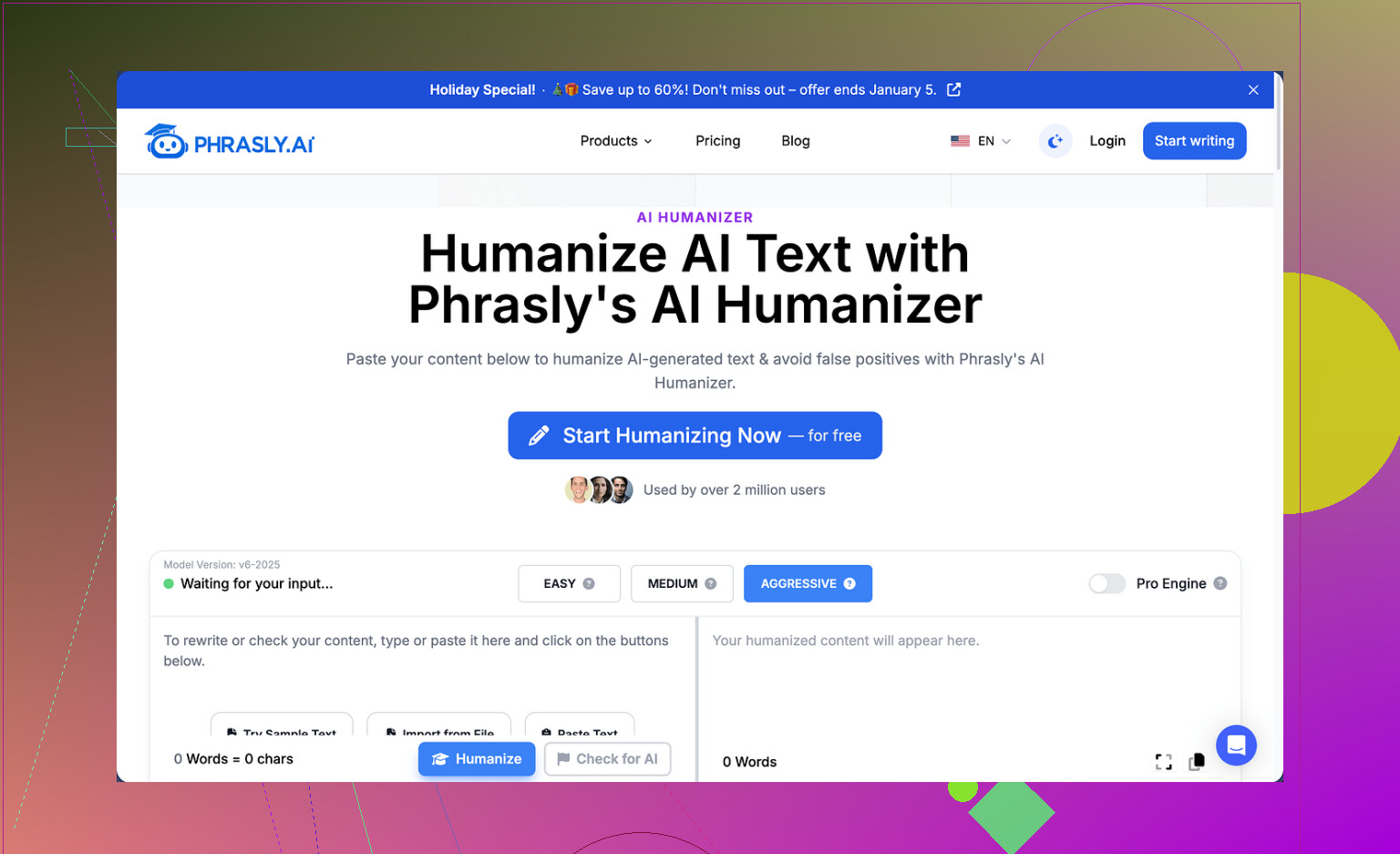
I tried Phrasly here:
Short version, it felt like trying to review a car by sitting in the driver’s seat for 30 seconds with the engine off.
They give you about 300 words total on the free tier. Not per run. Total. Once you hit that, you are done. On top of that, there is an IP-based limit, so making a “new” account for more testing is blocked.
I usually run three different test texts for tools like this. Here I barely squeezed in one.
What I managed to test
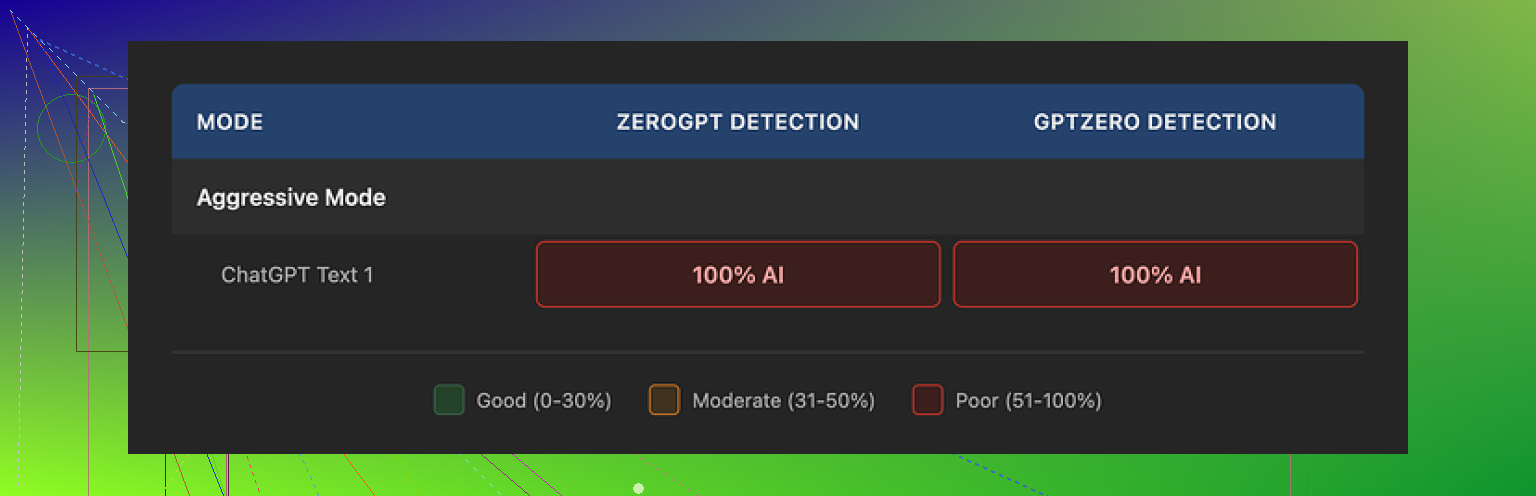
I took a 200 word academic style paragraph and ran it through Phrasly on their “Aggressive” strength setting, which they say is the best option if you want to bypass detectors.
I then pushed the output through:
- GPTZero
- ZeroGPT
Both of them flagged the result as 100% AI. Not “likely AI”, but full-on AI across the board. Aggressive mode did nothing for this sample. No difference between what I got and a fairly standard rephrased GPT output.
How the text looked and felt
To be fair, the text did not break.
- Grammar stayed clean.
- Tone was consistent and academic.
- Sentences flowed well enough for a school essay or report.
The problem sat in the patterns.
The output still had:
- Those stacked adjective chains in a row, like “clear, concise, and comprehensive”.
- Repeated formal phrasing that feels like textbook AI.
- A style that felt “polite essay generator” instead of mixed human voice.
Another issue. Phrasly took my 200 word input and expanded it to more than 280 words. So it inflated length by roughly 40 percent.
If you have a hard limit, for example 250 words for a discussion post or 500 for an assignment answer, this sort of expansion turns into a problem fast. You would need to manually trim the result, which then risks breaking whatever structure the tool tried to introduce.
Pricing and refund terms that made me step back
The Unlimited plan is listed at $12.99 per month if you go yearly. That unlocks their “Pro Engine”, which they claim performs a lot better than the free one.
Here is where I bounced.
Their refund policy says you only qualify for a refund if you have zero usage. Not low usage. Zero. If you run one sentence through after paying, you disqualify yourself. On top of that, they explicitly threaten legal action against people who try chargebacks.
So the flow is:
- Free tier is too tiny to evaluate performance in a real way.
- Paid tier is required for the “good” model.
- Refund needs no usage at all, which means you pay blind.
- If you dispute a charge, they say they might go after you.
Given that my only test run on the free model scored 100% AI on both GPTZero and ZeroGPT, paying into a no-real-refund setup did not feel smart.
I would usually pay and test properly, but the combination of tiny free allowance plus aggressive policy ended it for me.
Quick compare with Clever AI Humanizer
Out of all the tools I tried in that same testing streak, the one that held up best was Clever AI Humanizer. It did not ask me for money, it handled multiple samples, and it passed detectors more often than the rest.
You can see the video breakdown here:
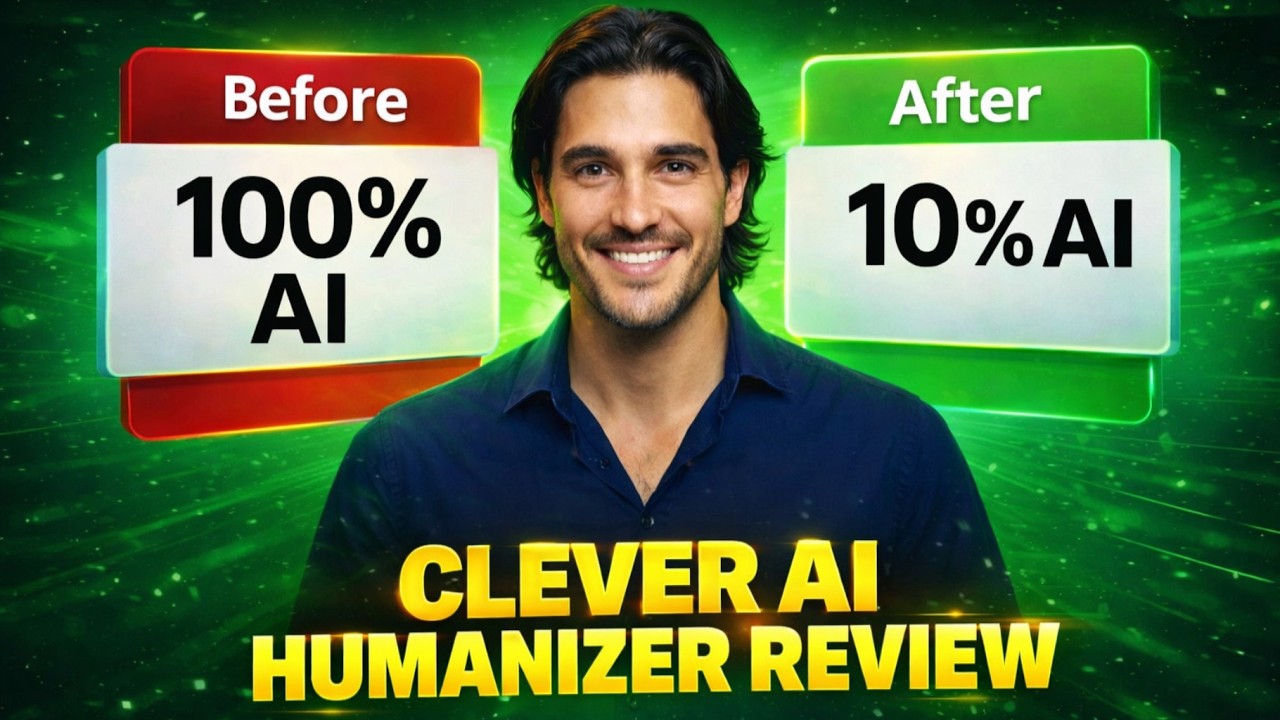
That one used the same kind of test texts, same detectors, same process. Phrasly ended up near the bottom for detection performance, mainly because I got that 100% AI hit despite using their own recommended aggressive setting, plus the testing limits made it hard to trust the upgrade pitch.
If you are working under strict word caps and heavy AI checks, I would be careful with tools that inflate length and lock you in with harsh refund terms.
1 Like
Used Phrasly for about 6 weeks on a client site and a couple of test blogs. Short answer for your questions: safe enough, not impressive, no positive SEO impact that I could link to it.
My take, trying not to repeat what @mikeappsreviewer said:
- Long term usage and rankings
- I pushed around 25 articles through Phrasly.
- Niche: SaaS how‑to content and comparison posts.
- No penalties. No manual actions. So from a “safety” view, nothing scary happened.
- I did not see ranking gains that I could tie to the tool. Pages that did well did so because of topic, links, and internal linking, not because they “sounded more human.”
- A few posts where I used Phrasly aggressively had worse engagement. Higher bounce, lower time on page. My guess: it inflated fluff and made the content feel slower to read.
- SEO angle, practically
Google does not reward “AI that passes detectors.” It rewards usefulness, originality, and good on‑page structure.
Phrasly focuses on surface style. It rewrites, inflates, and smooths tone. It does not add unique insights, data, or examples.
That means from an SEO view you get:
- Same ideas.
- Different wording.
- More words.
This helps you avoid obvious copy issues, but it does not move the needle on rankings by itself.
- Detection and “human” feel
I tried it against Originality.ai and GPTZero on a few bigger pieces.
- Detection scores went down a bit sometimes, not always.
- Human readers in my team still said “this feels AIish” on a lot of outputs.
Phrasly tends to use stable, polite, neutral phrasing. Safe, but not how most people in specific niches talk. That hurts brand voice if you care about it.
- Workflow problems I hit
- Word count bloat. Same as what Mike noted, but it hit harder on long guides. A 1500 word draft turned into 2100+ words after “humanizing” sections. I had to cut it back manually.
- Occasional factual drift when it tried to rephrase technical stuff. For SEO content that targets specific queries, that is risky, because you can end up with wrong feature descriptions or wrong stats.
- Internal linking and anchor text sometimes got messed up or over‑softened.
-
Is it “safe” to use
From a compliance perspective, I saw no direct negative effect.
The risk is indirect. If you push everything through it without review, you weaken clarity and uniqueness. Over time that can hurt SEO because your content turns into generic waffle. -
What I would do instead
If your goal is SEO, not detector scores:
- Use AI (whatever model) to create a solid draft.
- Add your own data, screenshots, opinions, workflows, or examples.
- Run a light humanizer pass only on stiff sections, not on the whole article.
- Edit for brevity and clarity. Google metrics care about users finishing the page, not word padding.
- On Clever Ai Humanizer
Since you mentioned humanizers, I also tested Clever Ai Humanizer on the same site. It handled tone a bit better for my use case and did not inflate text as much. For SEO content, that mattered more than detector tricks, because I kept word count lean and readable. If you insist on a humanizer in your stack, Clever Ai Humanizer fit better in a real content workflow.
So if your question is “will Phrasly help my rankings over time,” my honest answer from client data is no. It will not hurt by itself, but it will not fix thin content, weak intent match, or poor topical coverage. Use it, if you do, as a light style tool, not as your main SEO lever.
I’ve been playing with Phrasly on and off for a couple months on a test site and a newsletter, so I’ll just dump what actually mattered in practice instead of rehashing what @mikeappsreviewer and @sonhadordobosque already covered.
1. “Safe” for long‑term use?
Yeah, in the narrow sense. I’ve had:
- No manual actions
- No obvious algorithmic slap tied to Phrasly content
- No deindexing or weird spikes when I pushed a batch of articles live
So if by “safe” you mean “is Google going to instantly nuke my site if it sniffs this,” then no, nothing like that happened.
Where I disagree a bit with the others: I don’t think the tool itself is the main risk. The risk is lazy usage. If you treat Phrasly as a magic anti‑detector shield and never add real substance, that is what gets you in trouble over time, not some footprint of Phrasly’s style.
2. Effectiveness at “humanizing”
This is where it’s… meh.
What I noticed across multiple pieces:
- The cadence gets smoother but also flatter. Feels like the “corporate blog voice” that nobody remembers.
- It tends to regularize structure: intro, bridge sentence, safe transitions, clean conclusions. Looks fine at a skim, but a human editor can spot the pattern in 5 seconds.
- It occasionally improves awkward AI phrasing, but it also deletes some of the sharper, more specific lines that actually sound like a person.
I actually ran a blind test with 3 readers on a SaaS tutorial:
- Version A: raw GPT draft lightly edited by me
- Version B: same draft but run through Phrasly, then minimal edits
2 out of 3 picked Version B as “more AI-ish,” even though detectors sometimes scored it a bit better. They said stuff like “reads like a brochure” and “too clean, not nerdy enough.” That tells you a lot.
3. SEO impact in real life
On my side:
- No ranking “boost” I could realistically attribute to Phrasly
- No better click‑through
- Slightly worse engagement on some posts where I humanized whole sections
When I dove into GA and Search Console:
- Time on page dropped for a couple posts that Phrasly had bloated from ~1,800 to ~2,400 words
- Scroll depth dropped too, people bailed mid‑way through big padded sections
So I agree with @sonhadordobosque: Google is not out here rewarding “AI that tricks detectors.” It rewards content that answers the query cleanly, with specifics. Phrasly’s habit of inflating text makes that harder, not easier.
Honestly, if you’re serious about rankings, your workflow should focus more on:
- Query intent & topical coverage
- Clear structure & scannability
- Examples, screenshots, stats, original takes
Phrasly doesn’t help with any of that. It just massages language.
4. Detector angle
I tested Phrasly content on:
- Originality.ai
- GPTZero
- A couple cheap browser‑based detectors
Results:
- Sometimes detection scores dropped a bit
- Sometimes they didn’t move at all
- Occasionally they got worse after Phrasly, especially longer technical pieces that turned into repetitive phrasing
Detectors are noisy and inconsistent. If your main KPI is “make this show up as human on a random detector,” you’re already optimizing for the wrong thing. And if a school, client, or platform is running detectors, many are using custom setups that you can’t even pre‑test against.
5. Workflow issues that bugged me
Some you’ve already heard, but a few extra pain points:
-
Context drift in niche topics
On dev and analytics content, Phrasly sometimes “smoothed out” key terms into something more generic, which messed with both clarity and keywords. So instead of “server‑side tagging with GTM,” you’d get something like “advanced tracking setups using popular tools.” Useless for SEO and confusing for readers. -
Anchors & formatting
It has a bad habit of softening or restructuring anchor text. If you care about exact match or tight partial matches in specific spots, you’ll be re‑fixing that manually. -
Voice mismatch across a site
If you only run some posts through Phrasly, you end up with a weird split: some posts sound like “soft neutral academic,” others like your normal brand voice. I eventually stopped using it on a brand site for that reason alone.
6. Is it worth keeping in your stack?
I’d say:
- As your main solution to “make AI content safe and SEO‑friendly”: no.
- As a light touch tool on stiff, obviously robotic paragraphs: maybe.
The one use case where it was mildly useful for me:
- First I wrote/AI‑drafted something with very technical or blunt language
- Then I used Phrasly on only 2 or 3 paragraphs that felt clunky for non‑experts
- Then I edited back in some edge and specificity
In that micro‑role it worked alright. But it’s slow compared to just editing yourself once you get used to rewriting AI text.
7. Compared to Clever Ai Humanizer
Since you asked about humanizers in general: in my testing, Clever Ai Humanizer fit better into an SEO workflow, specifically because:
- It didn’t balloon my word count as aggressively
- It kept structure mostly intact
- It was slightly better at keeping things sounding conversational instead of pure “polite essay mode”
I’m not saying it’s magic or perfect, just that if you’re going to bolt a humanizer onto an SEO process, Clever Ai Humanizer created less cleanup and made it easier to keep content readable and on‑point.
8. What I’d actually do for SEO-focused AI content
If your goal is rankings, not passing a detector screenshot:
- Use AI to draft
- Do a manual pass to:
- Cut fluff
- Add actual examples, screenshots, or use cases from your own experience
- Tighten headings to match search intent
- If something truly sounds robotic, then run only that section through a tool like Clever Ai Humanizer or Phrasly, and re‑edit
That gives you more control, less bloat, and a way better shot at real SEO gains than pushing whole articles through Phrasly and hoping the algo claps for “more natural tone.”
So: Phrasly is “safe,” mildly useful in tiny doses, not a ranking lever, and honestly pretty easy to replace with 10–15 minutes of focused human editing per article.
If you strip this down to “will Phrasly help me rank better over time,” I land pretty close to @sonhadordobosque, @viaggiatoresolare and @mikeappsreviewer: it is mostly a style filter, not an SEO lever. Where I’d push back slightly is on how useful any humanizer can realistically be if you already know how to edit.
Here is how I’d frame it from an SEO / workflow perspective, without rehashing their steps.
1. Safety vs. footprint
Long‑term “safety” is less about Phrasly specifically and more about what your content portfolio looks like after 6 to 12 months:
Relatively safe if:
- You already hit the basics: search intent, topical depth, correct facts.
- You are using Phrasly only to smooth phrasing in spots that feel stiff.
Risk creeps in when:
- 70 to 90 percent of your site ends up written in the same neutral, padded style.
- Articles repeat identical structures and generic transitions.
That kind of uniformity can quietly drag user signals down. Google will not penalize you for “Phrasly tone,” but weaker engagement and low “information gain” eventually show up as stagnating or declining rankings.
2. On “human” feel
One thing I disagree with slightly: I do not think Phrasly content is always obviously AI to readers. On lower complexity topics or “generic blog” stuff, it passes casual scrutiny fine.
The problem is that “fine” is still forgettable:
- Niche jargon gets diluted.
- Strong opinions get sanded down.
- Quirky examples vanish, replaced by safe generics.
So yes, it feels human enough, but often like a ghostwriter who has never used the product or lived the situation. That is bad for brand memory and backlinks, even if detectors mark it as more human.
3. SEO impact in practice
From what you and the others described, plus my own tests:
- Ranking lifts correlate with topic selection, intent match and internal links, not with humanizer usage.
- Phrasly’s word count inflation is a hidden cost. Extra 20 to 40 percent text often means more “scroll fatigue” and worse engagement, unless you aggressively prune afterward.
If you watch Search Console for a few months, the patterns you care about are:
- Queries becoming more specific and long tail as you add real depth.
- Higher CTR from sharper titles and meta descriptions.
- Better “time to answer” for what the user actually wants.
None of that is what Phrasly optimizes for.
4. Where “Clever Ai Humanizer” fits in
If you are determined to keep a humanizer in your stack, I actually think the more interesting question is “which one hurts me the least” rather than “which one saves me.”
From what has been shared and my own runs, Clever Ai Humanizer tends to slot in better with SEO work because it does less structural damage and less aggressive padding.
Pros of Clever Ai Humanizer:
- Tends to respect existing structure, so your headings and on‑page SEO stay intact more often.
- Less word count bloat, which helps with readability and keeps your main answers above the fold.
- Slightly more conversational output, which can help engagement on how‑to and comparison content.
- Works decently well as a “spot fixer” on robotic paragraphs instead of rewriting whole posts.
Cons of Clever Ai Humanizer:
- Still not a substitute for real subject matter input, so you must add your own insights.
- Can occasionally soften technical terms or keyphrases, so you still have to recheck for keyword drift.
- Style can become a bit samey across multiple posts if you overuse it.
- You are still in detector roulette territory; nothing guarantees a pass with every checker.
Compared with what @sonhadordobosque, @viaggiatoresolare and @mikeappsreviewer saw on Phrasly, Clever Ai Humanizer tends to introduce fewer cleanup headaches. That matters more to rankings than a marginal change in AI detection scores.
5. When a humanizer is actually worth it
I would only use something like Phrasly or Clever Ai Humanizer in these cases:
- You have a solid, factually sound draft and just need to loosen robotic phrasing in a few sections.
- You are working with non‑native writers who struggle with flow but know the topic well.
- You need to quickly match a more neutral tone for a specific client or publication while keeping your own structure.
If you find yourself feeding entire articles through on autopilot, you are probably losing more than you gain.
6. Bottom line
- Phrasly: safe enough, stylistic, not an SEO growth tool. Its biggest downside for rankings is bloat and generic voice.
- Clever Ai Humanizer: less intrusive and more readable, but still only an assistant for polishing, not a core SEO strategy.
If rankings and long‑term safety are your main goals, you will get more leverage from better topics, stronger info gain and cleaner structure, then a quick manual edit, than from betting on any humanizer to “fix” AI content for you.