I accidentally deleted important folders and files from my USB drive, and now I’m trying to find the best USB recovery software to get them back. The drive has work documents and personal photos I really need, so I’d appreciate advice on safe, reliable USB file recovery tools that actually work.
I’ve burned way too much time testing USB recovery apps, mostly because I had to. Lost photos, wiped flash drives, broken partitions, file systems turning into a mess, sticks showing up empty for no clear reason, I ran into all of it. Each time, I installed another tool and checked whether it could pull files back or if it was all front-end polish and no results.
After enough of those tests, a pattern showed up. Most tools do fine when the job is simple, like files deleted a few minutes ago from a healthy USB drive. Things start falling apart once the drive was formatted, the partition table got damaged, or the file system went RAW. At that point, your choice matters a lot more. So when people ask me what to use, my answer depends on two things. How important is the data, and are you okay paying for software.
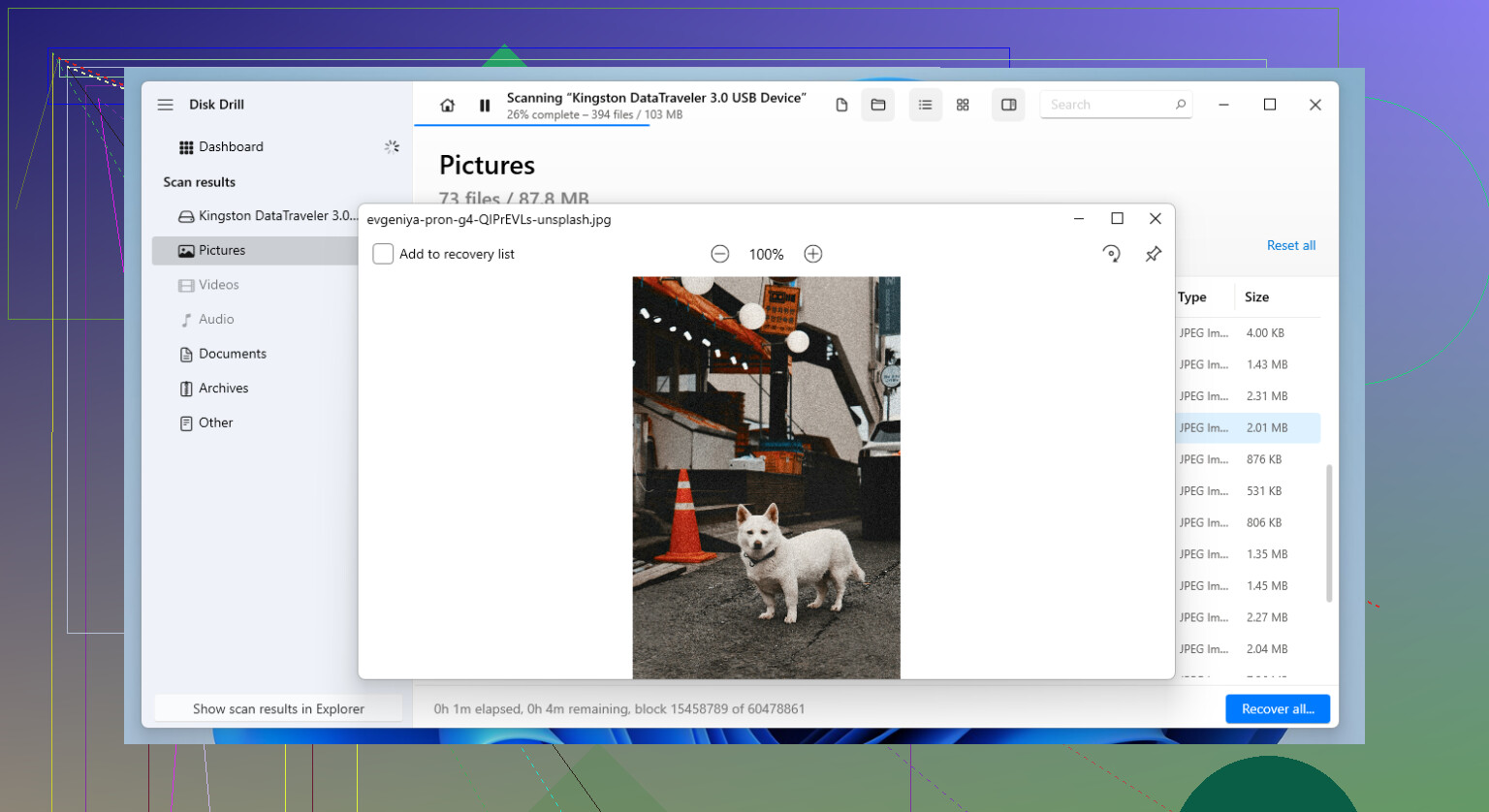
If I had to name one option for most people, I’d point to Disk Drill.
Why that one. Because it held up across different messes, not only basic deletions. I’ve seen it do decent work on formatted USB sticks, missing partitions, and damaged file systems. It also recognizes a long list of file types, which matters more than people think. The preview feature helped me sort good recoveries from junk fast. If a scan finds 20,000 files and half of them are broken names with no usable content, preview saves you from wasting an hour.
One part I liked more over time was the byte-to-byte backup feature built in. USB drives often fail in ugly ways. They disconnect mid-scan. They freeze. Sometimes they work once, then vanish on the next reconnect. Making an image first gave me a safer path. I worked from the copy and left the original drive alone. If your stick is unstable, do this first. Don’t keep hammering the same hardware and hope for luck.
If you want a free option, Recuva is still one of the better picks I’ve used. It works well for the usual stuff, deleted files on a USB drive which still reads normally and hasn’t been through formatting or corruption. It’s easy to figure out, the scans finish fast, and you won’t spend half the night clicking through settings.
Still, Recuva drops off once the damage gets uglier. Formatted drives, broken partitions, RAW volumes, heavier corruption, those were the cases where it started missing things or found less than I expected. In those jobs, Disk Drill usually did better for me.
A few rules matter before you run anything:
- Stop writing to the USB drive right away. If files were deleted, they often stay recoverable until new data lands on top of them. Copying one more folder to the drive might wipe out what you were trying to save. Open Disk Management and see how the drive appears. If the size looks close to normal, software recovery still makes sense. If Windows shows the wrong capacity, or the drive doesn’t appear right, I’d start thinking hardware failure.
- Save recovered files to another device. Don’t put them back onto the same flash drive. People do this all the time, then wonder why the second scan finds less. You’re overwriting your own recovery.
- Keep your expectations in check. I’ve watched people test five or six tools in a row, hoping one more scan would fix everything, when the smarter move would’ve been having a backup from the start. The 3-2-1 rule is still the thing I trust most. Keep three copies of your data, use two kinds of storage, and keep one copy somewhere else. It’s boring advice, yeah, but it saves your skin.
3 Likes
If the USB still shows the right size and opens, I’d start with Disk Drill. It tends to pull back more folder structure and filenames than a lot of cheap tools, which matters for work docs and photo sorting. I don’t fully agree with @mikeappsreviewer on Recuva as the best free fallback though. For older USB sticks, I’ve had PhotoRec beat it on raw photo recovery, even if the interface is ugly as heck.
What I’d do:
- Stop using the USB. Right now.
- Plug it into a stable PC, no hubs.
- Run a deep scan with Disk Drill.
- Recover files to your internal drive, not back to the USB.
- If the scan shows lots of missing names or broken folders, try a second pass with PhotoRec for the photos.
Disk Drill is easier for mixed data, docs, JPG, PNG, PDF, Office files. PhotoRec is stronger when filenames are gone and you only care about file content. That tradeoff matters.
If you want a quick look first, this Disk Drill review is decent and easy to follow: watch this Disk Drill USB recovery walkthrough
One more thing, if Windows says the drive needs formatting, don’t click it. That trips ppl up all the time.
If the USB is still detected normally, I’d actually rank the options like this for your situation: Disk Drill first for easiest full recovery pass, then maybe R-Studio if the drive turns out to have file system damage and you don’t mind a steeper learning curve. I know @mikeappsreviewer and @nachtschatten leaned hard into the usual picks, and that’s fair, but I think people underrate how much the type of loss matters.
For accidentally deleted folders with work docs + personal photos, Disk Drill is probly the best balance of simple + effective. Big reason: it usually keeps folder structure and filenames better than pure carving tools. That matters a lot more for documents than people admit. Getting back 800 unnamed files is not exactly fun.
One small disagreement: I would not jump between 5 different recovery apps right away. Every scan on a flaky USB is stress on the device. If the stick disconnects, gets hot, or acts weird, image it first or stop and consider pro recovery.
Also, check the Trash/Recycling behavior first. Some USB deletions through Windows apps can leave temp copies or cloud-sync traces if those folders were ever synced.
If you want extra reading, I came across a solid Reddit thread about Disk Drill for USB drive recovery with important files.
Short version:
- Disk Drill: best all-around for USB file recovery
- Recuva: fine for super basic deletes
- PhotoRec: good for photos, terrible for organization
- R-Studio: powerful, less beginner-friendly
And yeah, don’t save recovered files back to the same USB. Ppl still do that somehow.