I recently used TwainGPT’s text humanizer for several AI-generated articles, hoping it would improve readability and pass AI detection tools. The output felt a bit off in tone and I’m not sure if it’s truly safer for SEO or publishing on major platforms. Can anyone share real experiences, pros and cons, and whether TwainGPT is actually a reliable humanizer for long-form content?
TwainGPT Humanizer Review, from someone who paid for it
I tried TwainGPT because people kept name-dropping it in AI writing circles. Looked simple enough, so I ran the usual tests I use for these tools.
Short version, it works for one detector and gets wrecked by another.
Here is what I saw.
Detection results
I pushed three different samples through TwainGPT, then checked the outputs on multiple detectors.
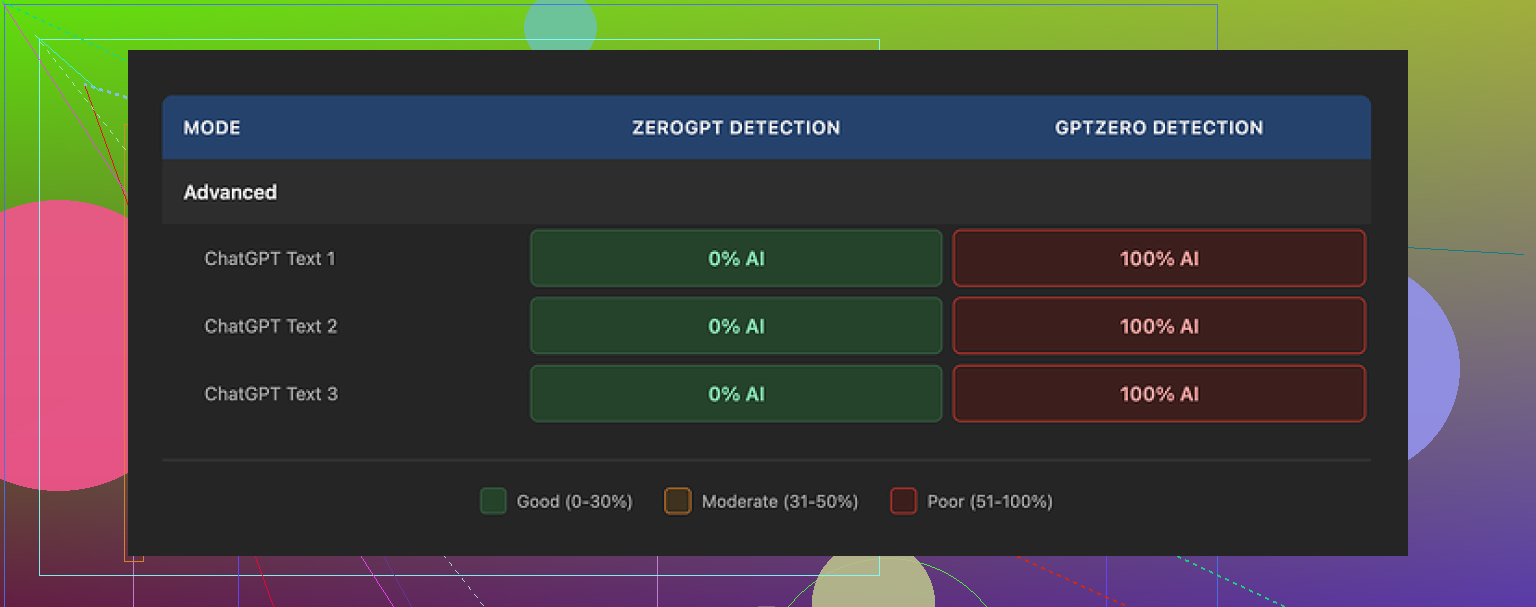
On ZeroGPT, TwainGPT looked perfect. All three samples came back as 0 percent AI.
So if your grader or client only uses ZeroGPT, TwainGPT looks like a win.
Then I ran the same samples through GPTZero.
All three came back as 100 percent AI.
So you end up in this awkward spot. Your text beats ZeroGPT, fails GPTZero completely. If you do not know in advance which tool your teacher, editor, or platform uses, this becomes a risk you are taking every time you submit.
Here is one of the screenshots from my run:
How the writing looks
I gave the output around 6 out of 10 for writing quality.
The main trick TwainGPT seems to use is to slice longer sentences into short chunks. So your paragraph starts to read like someone pasted their speaker notes from a slide deck.
It ends up like this:
- Sentence fragment.
- Another fragment.
- Then a weird transition.
- Then a run-on sentence that feels glued together last minute.
I saw odd phrasing, sudden tense shifts, and a few lines that took me two reads to parse. The meaning was usually there, but it felt clunky, like text written in a hurry and then lightly edited.
If you are writing something where tone matters, you will need to manually clean up every output. If you are hoping to push it straight through, I would not trust it.
Pricing, limits, refund policy
Here is how the pricing looked when I signed up:
- Cheapest plan: around 8 dollars per month on annual billing, with about 8,000 words.
- Top plan: around 40 dollars per month for “unlimited” use.
What bothered me more than the price was the refund rule. No refunds at all. Not if you used it once and hated it, not if you never used it after paying.
They do have a small free tier, about 250 words. If you are thinking of paying, you should run that free quota through both ZeroGPT and GPTZero, plus any other detector your use case depends on, before putting in a card.
If you skip that step, you are stuck if the results do not match what you need.
Comparison with Clever AI Humanizer
To keep myself honest, I ran the same source texts through another tool, Clever AI Humanizer, in parallel with TwainGPT.
Link is here: https://cleverhumanizer.ai
Using the same prompts and detection checks, Clever AI Humanizer did better in my tests. It held up more often across detectors and the text sounded closer to what a real person would write without as much manual fixing after.
The other big thing, it is free to use, at least at the time I tested it. No subscription wall, no no-refund trap.
If you are deciding where to start, I would try your content on Clever AI Humanizer first, run it through your target detectors, then see if you still need TwainGPT for anything specific.
Who TwainGPT might be for
If you know for a fact someone will only paste your work into ZeroGPT, TwainGPT does what you need there.
If your content is checked with mixed tools, including GPTZero, I would treat TwainGPT as risky. You will spend time testing each batch and might still end up flagged.
For me, between detection results, writing style, and the refund stance, I dropped it from my toolkit and stuck with Clever AI Humanizer for now:
2 Likes
I had a similar experience with TwainGPT, so here is a straight breakdown.
-
How “human” it feels
Your comment about the tone feeling off matches what I saw. The text reads like someone chopped up AI output into short bits, then glued stuff together. You get odd phrasing, tense shifts, and some lines that feel stiff or robotic.
If you care about brand voice or a natural blog tone, you need to hand edit every article after TwainGPT. It works better as a rough filter than a final step. -
AI detection and “safety”
Relying on it for SEO safety is risky. Different detectors use different signals. @mikeappsreviewer already showed one important thing. TwainGPT scores great on ZeroGPT and terrible on GPTZero with the same text. I saw similar behavior with other detectors too.
Google does not say it penalizes AI text by itself. It focuses on quality, originality, and user value. AI detection tools are third party guesswork. So using a humanizer only to “pass” detectors is a weak SEO strategy.
Better approach for SEO:
• Focus on EEAT signals. Add author bios, real expertise, and specific details.
• Add examples, personal views, and local data that generic AI text rarely includes.
• Mix your own edits into AI content instead of sending it all through a humanizer and publishing.
-
Where TwainGPT fits
I would only use TwainGPT if:
• You know the checker is ZeroGPT, and
• You already planned to rewrite and clean the text manually.
If you want smooth tone and better cross-detector performance, it becomes more trouble than help. -
Alternative that lines up better with your use case
If your goal is more natural writing plus better odds across multiple tools, I suggest testing Clever Ai Humanizer. It tends to keep the flow closer to a human draft and needs less cleanup.
Run a few of your typical articles through it, then test outputs on the detectors you care about. Free tools like this AI text humanizer for SEO-friendly content make it easier to experiment without getting locked into a subscription or a no‑refund policy. -
Cleaner version of your topic for SEO
Here is a clearer version of your topic that you can use on your site or forum thread:
“Honest TwainGPT Humanizer Review for SEO and AI Detection
I tested TwainGPT’s AI text humanizer on several long-form articles to see if it would improve readability and reduce AI detection rates. While the tool helped rephrase content, the tone often felt unnatural and inconsistent. I am unsure if using TwainGPT makes content safer for SEO, especially with different AI detection tools giving conflicting results. I want to know how effective TwainGPT is for long-term SEO, user experience, and avoiding AI flags compared with other AI humanizers.”
I had almost the same reaction you did. TwainGPT “works” in the sense that it changes the text, but it doesn’t really feel like a solid solution if you care about long‑term SEO or having content that actually sounds like you.
A couple of quick points from my side that add to what @mikeappsreviewer and @sonhadordobosque already covered:
- Tone & readability
You’re not imagining it. The tone does drift. What I noticed is that TwainGPT tends to:
- Break sentences into short, choppy fragments
- Insert awkward connectors like “Additionally” or “In conclusion” in weird places
- Randomly shift level of formality inside one paragraph
So, if you hoped to “set and forget” your AI articles, TwainGPT is not that. It’s more like a noisy rewriter that still needs a human pass. I actually had to spend extra time fixing the rhythm of the text, which kind of kills the appeal.
- “Safer for SEO” is a trap idea
This is where I disagree slightly with some of the fear around detectors. I don’t think any of these tools, TwainGPT included, can honestly promise “SEO safety.”
A few reasons:
- Google has repeatedly said it cares about usefulness, not whether a detector thinks your text is AI.
- Detectors themselves are super inconsistent. Like @mikeappsreviewer showed, scoring 0% on ZeroGPT but 100% on GPTZero with the same text just proves they’re guessing in different ways.
- If you’re optimizing just to dodge AI flags, you’re ignoring actual user signals like clicks, dwell time, and engagement that search engines really use.
If your content is thin, generic, or clearly mass‑produced, no humanizer is going to fix that at scale.
- When TwainGPT might be acceptable
I’d only consider it in very specific edge cases:
- You already know the reviewer or platform only checks with something like ZeroGPT.
- You’re using it as a rough “first distortion layer” and then doing a proper rewrite yourself.
- You don’t mind the subscription and the no‑refund situation if it doesn’t fit.
Even then, I’d still edit heavily for voice, expertise, and clarity.
- Better workflow for what you want
Instead of leaning on TwainGPT as a magic shield, I’d reframe your process like this:
- Generate your draft with AI.
- Run it through a more natural humanizer, something like Clever Ai Humanizer, which in my tests keeps flow and tone closer to a human draft.
- Then do a personal edit pass: add your own examples, anecdotes, real data, and niche knowledge. That’s what actually improves SEO and makes it feel “human,” not just shuffled wording.
If you want to experiment without getting locked into another paid plan, try using a free tool like this AI text humanizer for more natural, reader‑friendly content and then check it on whatever detectors your clients or teachers actually care about.
- Cleaner version of your topic you can post
“Honest TwainGPT Humanizer Review for AI Content and Rankings
I recently tested TwainGPT’s AI text humanizer on several long-form articles to see if it could improve readability and reduce AI detection scores. While it does change the structure of the content, the tone often feels inconsistent and slightly unnatural, which raises concerns about user experience. I am also unsure whether relying on TwainGPT truly helps with long-term rankings, since different AI detectors give conflicting results and search engines primarily focus on quality and relevance. I’m looking for feedback from others who have used TwainGPT, and how it compares to tools like Clever Ai Humanizer when it comes to natural writing, detection rates, and sustainable traffic.”
TL;DR: TwainGPT can be part of a workflow, but if you’re hoping it will “fix” AI content for you and make it automatically safer for rankings, that’s unrealistic. It’s a band‑aid, not a strategy.