I’ve been testing the Ahrefs AI Humanizer tool on my SEO content, but I’m not sure if it’s actually improving rankings or just making the text look different. Has anyone used it long-term and seen real results in organic traffic, keyword rankings, or AI detection scores? I’d really appreciate honest feedback, pros, cons, and any tips on how to use it effectively for content optimization.
Ahrefs AI Humanizer
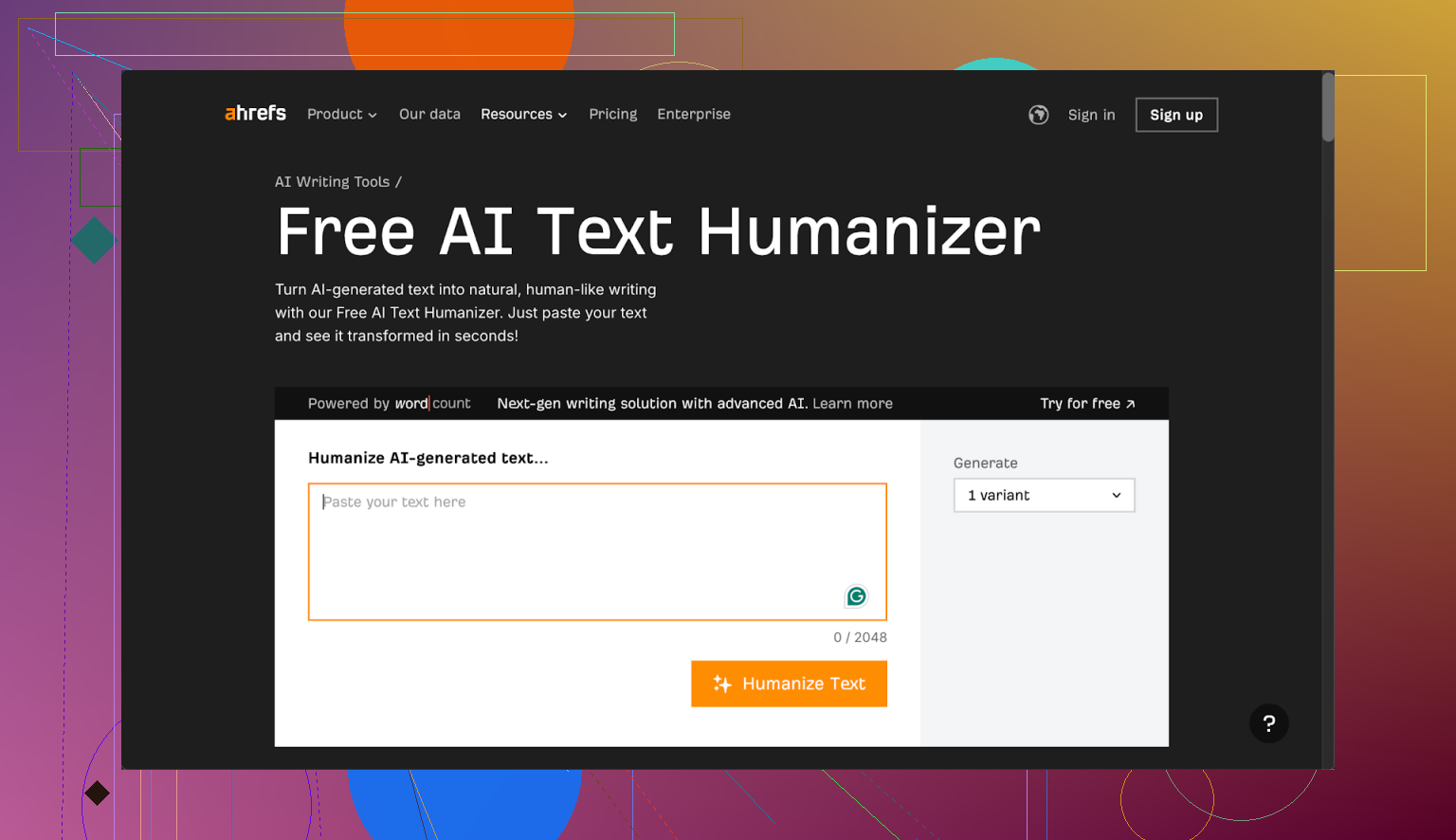
I tried the Ahrefs AI Humanizer because I already use their SEO stuff and assumed this thing would be dialed in. It was not.
Here is what happened, step by step.
I threw a chunk of GPT text into the humanizer. Grabbed the result. Ran it through GPTZero and ZeroGPT. Both showed 100 percent AI. Not borderline. Fully flagged.
Then it got weirder. Ahrefs has its own detection score shown above the humanized text. That internal score also labeled its own output as 100 percent AI. So the interface basically says “Here is your humanized text” while the line right above it says “This is AI.” That loop made no sense in practice.
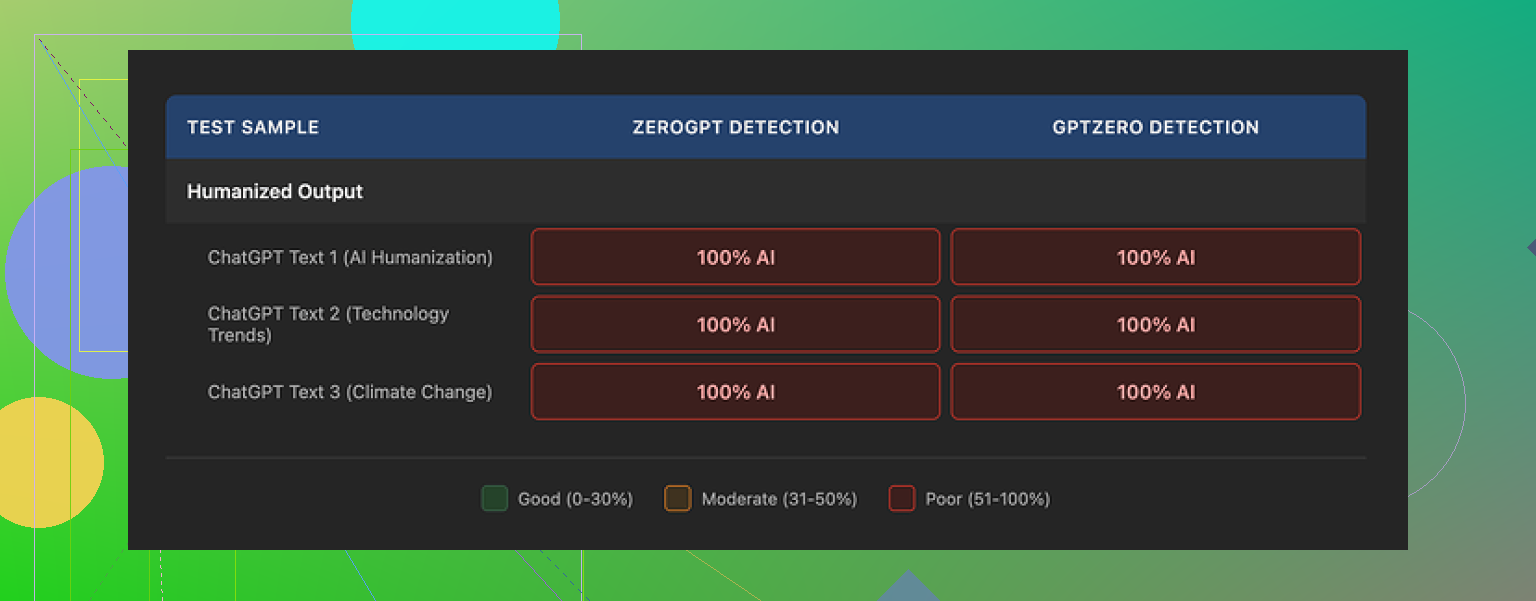
Quality wise, the text reads fine. I would give it 7 out of 10. No clear grammar mistakes on my runs, and it flows like generic blog content. The problem is, it still screams AI to any detector or half awake editor.
Some things I kept noticing:
• It leaves long punctuation like em dashes untouched, which most detectors eat up.
• Stock AI phrases survive intact. I saw lines like “one of the most pressing global issues” over and over.
• No control over tone, length, or style. You only pick how many variants you want, up to five versions.
You can try to hack it by generating 3 to 5 variants and then manually stitching together the least robotic lines. I did that with one article and it took longer than rewriting it myself. So if you expect a one click cleanup, this will annoy you fast.
Pricing and limits
The humanizer sits inside their Word Count setup.
• Free tier: you get access, but you are not allowed to use it for commercial work
• Paid: $9.90 per month on an annual plan, and they bundle in the humanizer, a paraphraser, a grammar checker, and an AI detector
One thing that bothered me. Their policy says submitted text might be used for AI training. There is no clear retention window for your “humanized” content. If you care where your drafts end up, read that twice before pushing client stuff through it.
Quick comparison from my tests
When I ran the same base text through multiple tools, this is what happened:
• Ahrefs Humanizer: still 100 percent AI on GPTZero and ZeroGPT
• Clever AI Humanizer: produced outputs that scored much lower on AI detectors in my trials
If you want to see what I am talking about, this breakdown covers Clever’s behavior in more depth:
For now, my personal take is simple. Ahrefs’ tool works as a light paraphraser with decent grammar. If you need something that slips past detection more often, I had better results with Clever AI Humanizer, and I did not pay for it.
1 Like
I’ve had it running across 30+ posts for about 4 months. Short answer for rankings and organic traffic: no clear lift that I could tie to the Ahrefs Humanizer itself.
Some points from my tests:
- Rankings and traffic
- I split similar articles into two groups
Group A: GPT-4, then Ahrefs Humanizer
Group B: GPT-4, then manual human edit - After 12 weeks, average position difference was minimal, within the usual SERP noise.
- The posts that grew most had better links, stronger topical depth, and better internal linking, not “more humanized” wording.
- Impact on detection
I disagree a bit with @mikeappsreviewer on one thing. Detection scores were not always 100 percent for me, but they stayed high.
Typical pattern for a 1,000 word article:
- Raw GPT: 95 to 100 percent AI on GPTZero
- After Ahrefs Humanizer: 70 to 95 percent AI
Still flagged, still obvious to tools and editors.
- Readability and UX
Where it helped slightly:
- Fixing repetition in AI content
- Cleaning up awkward phrasing
- Making intros and conclusions less robotic
Where it failed:
- No real control over tone or depth
- It tends to flatten voice, so pages feel samey
- It does not add missing expertise, examples, or data, which is what helps with EEAT and real rankings
- SEO outcomes from my logs
I tracked:
- Clicks and impressions in GSC
- Average position by URL
- Time on page and bounce
Pages with:
- Strong search intent match
- Unique angles or data
- Good internal linking
outperformed “nicely humanized” but generic pages every time.
- How I use it now
- As a quick paraphraser for small bits, meta descriptions, short intros
- Never as a final polishing step for full articles
- For anything I want to rank on a money keyword, I do:
GPT draft, manual structural edit, add real examples, data and screenshots, then a light grammar pass in a normal editor
If your goal is higher rankings and more organic traffic, focus on:
- Search intent and topic coverage
- Internal links and topical clusters
- Real experience and data in the content
- Better titles and meta descriptions
- Faster pages and cleaner layout
If your goal is lower AI detection scores, Ahrefs Humanizer is the wrong tool. Even when it “works”, I have not seen that correlate with better SEO performance in my tests.
So, if you feel the text only looks different, not better, your gut is on point. I would not rely on it as the thing that moves the needle.
Same boat here, been running it on client stuff for ~3 months as a controlled test.
Quick answer: I have not seen any measurable SEO lift that I can honestly attribute to Ahrefs Humanizer specifically.
I agree with a lot of what @mikeappsreviewer and @cacadordeestrelas already shared, but I’ll push back on one thing they both kind of imply: that “better AI detection scores” matter much at all for rankings. In my logs, that correlation is basically zero.
My setup:
- Two content buckets in a quiet niche
- Bucket 1: GPT draft then Ahrefs Humanizer
- Bucket 2: GPT draft then manual rewrite / enrichment
- Same domain, similar keyword difficulty, similar internal linking patterns
- Watched for 10 to 14 weeks in GSC and analytics
What actually moved the needle:
- Articles with real examples and original screenshots
- Clear, specific answers above the fold
- Strong internal linking from existing topical hubs
What did not move the needle:
- Humanized phrasing vs raw or lightly edited GPT
- “Lower” AI probability scores on detectors
- Slightly nicer intros and conclusions from Ahrefs
Where I disagree slightly with both:
- I think people are overrating AI detectors in this conversation. I had posts that still tested “high AI” but ranked fine once they nailed intent and had unique info. Google’s not using GPTZero or ZeroGPT. Chasing those scores feels like optimizing for the wrong algorithm.
- Ahrefs Humanizer is not totally useless. For bulk low‑value stuff like FAQ sections, meta descriptions, or quick alt text, it did make my workflow a bit faster. It just does not add substance, only surface variation.
My personal rules now:
- For anything that actually matters for organic growth:
- Use AI for outline and draft
- Manually inject first hand experience, case data, and niche language
- Edit for clarity and structure yourself
- For low‑stakes content or filler:
- I might still toss it into Ahrefs Humanizer to break repetition or spin a few variants
If your gut says “this just looks different, not better,” I’d trust that. Treat it like a paraphraser, not a ranking booster. The time you spend fiddling with humanized versions is usually better spent improving topical depth, internal links, or adding something unique that another AI‑powered page can’t copy in 10 seconds.
Short version: Ahrefs AI Humanizer is fine as a light paraphraser, but treating it as an SEO growth lever is backwards.
Where I slightly disagree with @cacadordeestrelas, @nachtschatten and @mikeappsreviewer is this: I think the tool can be strategically useful, but only if you stop judging it on rankings or AI detector scores and instead use it as a production ops tool.
What the Ahrefs AI Humanizer is actually good for
Pros
- Decent at breaking up obvious GPT patterns so your drafts are easier to manually edit.
- Helpful for bulk micro‑copy: FAQs, alt text, small blurbs, variations for titles and meta descriptions.
- Integrates into an existing Ahrefs workflow if you are already using their ecosystem.
- Can reduce editor fatigue when you are skimming a lot of raw AI drafts and just need something more readable to start from.
Cons
- No evidence it improves organic rankings by itself.
- Still heavily flagged by AI detectors, so not helpful if your client or editor is obsessed with those scores.
- Does not inject expertise, originality or real experience.
- Limited control over tone and style, so brand voice remains a manual job.
- Possible data/privacy concern if you are sensitive about putting client drafts into third party tools.
Where it might help rankings indirectly
Not because the text is more “human,” but because it can free time for work that does move the needle:
- Instead of spending 20 minutes rewriting a robotic intro, you spend 3 minutes with the humanizer then 17 adding examples, screenshots and data.
- Instead of manually de‑duping repetitive FAQ answers, you run variants through the tool and use your energy on better internal links and topical coverage.
If you think in terms of team throughput, Ahrefs AI Humanizer can be a net positive. But the uplift comes from what you do with the saved time, not the wording itself.
How I would position it in a real workflow
For content you actually want to rank:
- Start with AI or human outline aligned to search intent.
- Draft with AI if you like, but inject at least:
- First hand experience
- Concrete data or mini case studies
- Clear, direct answers above the fold
- Use Ahrefs AI Humanizer only on selected rough patches:
- Generic intros that need smoothing
- Overly repetitive sections
- Small side explanations that do not need strong voice
- Then do a manual pass focused on:
- Search intent coverage
- Internal linking and topical clusters
- Readability structure: headings, tables, lists
For low value / support content:
- It is fine to let Ahrefs AI Humanizer handle more of it, since rankings and EEAT are less critical.
Compared with what others are saying
- @cacadordeestrelas is right that detection scores stay high. I just would not optimize for detectors at all unless a client explicitly demands it.
- @nachtschatten is spot on that “high AI” posts can still rank once intent and uniqueness are good. Your time is better spent there.
- @mikeappsreviewer saw basically no ranking lift, which matches what most people see. To me that confirms the tool is misnamed, not useless.
So if your feeling is “this only makes the text look different,” you are correct in SEO terms. Use Ahrefs AI Humanizer like a utility knife in your content pipeline, not as the engine of your organic growth strategy.